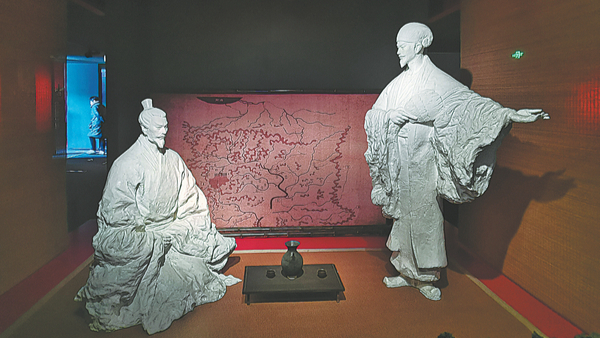
Liu Bei
Introduction
Liu Bei was a significant historical figure during the tumultuous era of the Three Kingdoms (220-280 AD) in ancient China. As a powerful warlord and the founding emperor of the Kingdom of Shu, Liu Bei's life and legacy have been immortalized through various cultural depictions, most notably in the classic Chinese novel "Romance of the Three Kingdoms." This novel portrays him as a virtuous and charismatic leader who rose from humble beginnings as a straw weaver to become an emperor. Liu Bei is celebrated for his ability to forge alliances and his dedication to restoring the Han Dynasty, which he claimed lineage from. His relationships with notable figures such as Guan Yu, Zhang Fei, and Zhuge Liang further cement his historical and cultural significance.
Early Life
Liu Bei's origins are often depicted as modest, with legends and historical accounts suggesting his early life was characterized by poverty. Born in the late Eastern Han Dynasty, Liu Bei claimed to be a descendant of Liu Sheng, a prince of Zhongshan, which linked him to the royal family of the Han Dynasty. This noble lineage provided him with a sense of legitimacy and a moral cause that would later define his aspirations. Despite his humble beginnings, Liu Bei was determined to rise above his circumstances, showcasing qualities of leadership and charisma from an early age. His early life, although not extensively documented, laid the foundation for his eventual rise as a key player in the power struggles of the Three Kingdoms period.
Rise to Power
Liu Bei's journey to power was marked by strategic alliances and a series of military campaigns. His rise began as he aligned himself with various influential figures and warlords of the time. Initially, Liu Bei served under Gongsun Zan, a northern warlord, where he gained valuable military experience. This period of service marked the beginning of his ascent in the complicated political landscape of the era.
Service under Gongsun Zan
During his time with Gongsun Zan, Liu Bei honed his military skills and began to establish his reputation. Gongsun Zan recognized Liu Bei's potential and appointed him as a county magistrate, which provided Liu with a platform to demonstrate his governance abilities. However, as the political climate shifted, Liu Bei found himself compelled to seek new opportunities, leading him to join forces with other powerful figures.
Alliance with Cao Cao
Liu Bei's strategic acumen was evident in his temporary alliance with Cao Cao, one of the most powerful warlords of the time. This alliance was primarily driven by the need for survival and mutual benefit in the face of common enemies. Although the alliance was short-lived due to ideological differences and Liu Bei's desire for autonomy, it was a crucial step in his rise to power. It provided him with insights into the intricacies of warfare and the political machinations of the period.
Alliance with Sun Quan
The alliance with Sun Quan, the ruler of the Kingdom of Wu, was another pivotal moment in Liu Bei's quest for power. This strategic partnership was solidified through marriage, as Sun Quan's sister Sun Shangxiang married to Liu Bei. The alliance strengthened Liu Bei's position and was instrumental in his efforts to establish his own domain. Despite occasional tensions, the alliance with Sun Quan provided Liu Bei with military support and resources, which were vital in the subsequent establishment of the Kingdom of Shu.
Establishment of Shu Han
Liu Bei's establishment of the Kingdom of Shu was a culmination of his strategic maneuvering and visionary leadership. He declared himself emperor in 221 AD, marking the beginning of the Shu Han Dynasty. This declaration was not just a political move but also a symbolic gesture aimed at restoring the Han Dynasty's legitimacy. Liu Bei's reign was characterized by efforts to consolidate power, build a capable administration, and defend his territory against rival states. His leadership, though challenged by external threats and internal strife, left a lasting legacy in Chinese history.
Relationships
With Zhuge Liang
One of the most defining relationships in Liu Bei's life was with Zhuge Liang, his chief strategist and advisor. Zhuge Liang, often referred to as the "Crouching Dragon," was renowned for his wisdom and strategic brilliance. Liu Bei recognized Zhuge Liang's talents and personally visited him thrice, known as the "Three Visits," to persuade him to join his cause. This partnership was instrumental in the success of Liu Bei's campaigns and the administration of the Kingdom of Shu. Zhuge Liang's contributions extended beyond military strategy to include governance and diplomacy, making him an indispensable ally to Liu Bei.
With Guan Yu and Zhang Fei
Guan Yu and Zhang Fei were not only Liu Bei's most trusted generals but also his sworn brothers, as famously depicted in the "Oath of the Peach Garden." This oath symbolized their unwavering loyalty and commitment to each other and their shared cause. Guan Yu was celebrated for his martial prowess and loyalty, while Zhang Fei was known for his bravery and strength. Together, they formed a formidable trio that was central to Liu Bei's military successes. Their bond was legendary and has been depicted in numerous cultural representations, highlighting the themes of loyalty, brotherhood, and honor.
Cultural Depictions
Liu Bei's legacy extends beyond historical records into the realm of cultural depictions. He is a central figure in "Romance of the Three Kingdoms," one of China's most revered classical novels, where he is portrayed as a paragon of virtue and leadership. This portrayal has influenced various adaptations in literature, theater, and popular media, both in China and internationally. Liu Bei's story is often woven into narratives exploring themes of loyalty, justice, and the restoration of order amidst chaos. His life and the broader Three Kingdoms era continue to captivate audiences, serving as a rich source of inspiration for storytellers and artists.








